 English
 Español
  Português
  русский
  Français
  日本語
日本語  Deutsch
  tiếng Việt
  Italiano
  Nederlands
  ภาษาไทย
  Polski
  한국어
한국어  Svenska
  magyar
  Malay
Malay  বাংলা ভাষার
  Dansk
Dansk  Suomi
Suomi  हिन्दी
  Pilipino
  Türkçe
  Gaeilge
  العربية
  Indonesia
  Norsk
Norsk  تمل
تمل  český
český  ελληνικά
  український
  Javanese
  فارسی
فارسی  தமிழ்
தமிழ்  తెలుగు
  नेपाली
  Burmese
  български
  ລາວ
ລາວ  Latine
  Қазақша
  Euskal
  Azərbaycan
  Slovenský jazyk
  Македонски
  Lietuvos
  Eesti Keel
  Română
  Slovenski
  मराठी
मराठी  Srpski језик


Does the Brand of Oil/Lube Filter Matter, or Are All Filters the Same Inside?
GREEN-FILTER Oil/Lube Filter technology has become a focal point in ongoing discussions about whether brand reputation truly affects engine protection, or if most filters inside the market are essentially identical in function. The question continues to surface among fleet operators, maintenance engineers, and equipment technicians who regularly deal with lubrication systems across different machines and environments. At the center of this discussion is a simple concern: does the name on the filter change real-world performance, or is it just labeling on a standard component?
In practice, an Oil Filter is designed to capture contaminants suspended in lubricating fluids, helping maintain stable operation in engines and hydraulic systems. Yet as global supply chains expand and product ranges grow beyond 20,000 SKUs in companies like GREEN-FILTER, the perception of interchangeability has become more common. This article explores how design differences, application requirements, and service conditions influence outcomes far more than many users initially assume.
The Role of Filtration in Modern Equipment Systems
Across agriculture, construction, transportation, and stationary power generation, lubrication systems operate under constant stress. Metal particles, dust ingress, fuel residue, and thermal breakdown products gradually accumulate within oil circuits. Without effective separation, these contaminants can alter viscosity and increase wear on precision components.
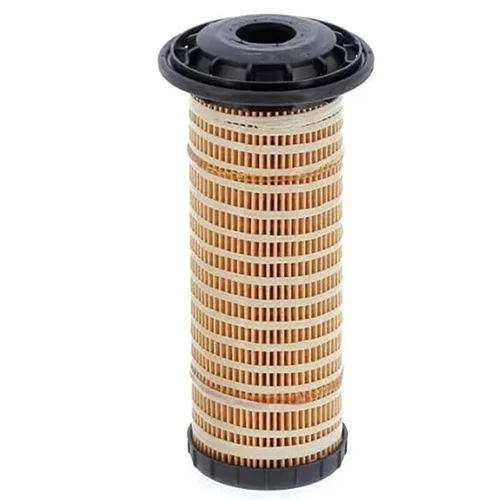
An Oil Filter is therefore not a passive accessory but a controlled barrier that supports system stability. While many filters appear similar externally, internal architecture often varies significantly depending on intended application. Flow resistance, media density, pleat geometry, and bypass valve calibration all influence how the filter behaves under pressure fluctuations.
Why Internal Design Matters More Than Appearance
A common misconception is that filters with similar dimensions will perform the same way. In reality, internal engineering determines efficiency and durability. For example, two filters may fit identical housings but respond differently under cold-start conditions or high-load operation.
Below is a simplified comparison of typical design variations:
| Feature | Basic Design Filter | Advanced Application-Tuned Filter |
| Filter Media Density | Standard fiber mesh | Multi-layer synthetic blend |
| Particle Retention | Moderate | High precision separation |
| Pressure Stability | Limited under spikes | Reinforced collapse resistance |
| Bypass Valve Response | Fixed threshold | Calibrated for dynamic loads |
| Service Interval Behavior | Shorter consistency | Extended stability window |
Such differences highlight why evaluating only external size or catalog grouping is insufficient when selecting an Oil Filter for demanding environments.
Are All Filters Functionally the Same?
The assumption that all filters perform identically often comes from simplified product categorization. However, real-world usage shows noticeable variation depending on operating temperature, contamination levels, and duty cycles.
In heavy-duty environments, filtration systems must adapt to irregular operating conditions. For instance, construction machinery may experience abrupt load changes, while agricultural systems face seasonal dust exposure. In these cases, filtration stability becomes more important than nominal specifications alone.
GREEN-FILTER Oil Filter solutions are developed around this variability principle, with attention given to compatibility across diverse mechanical systems rather than a one-size-fits-all structure. This approach reflects a broader industry shift toward application-specific filtration rather than generic replacement parts.
Material Science Behind Filtration Efficiency
Filtration performance is largely determined by material composition. Modern filter media often combines cellulose fibers with synthetic reinforcement layers to improve particle capture without restricting flow. This balance is critical because excessive restriction can lead to pressure buildup, while insufficient density reduces contaminant control.
Hydraulic systems, engine lubrication circuits, and transmission systems each require different filtration thresholds. For example, hydraulic systems prioritize consistent flow stability, while engine oil systems emphasize fine particle capture.
An Oil/Lube Filter must therefore be engineered not only for cleanliness but also for hydraulic compatibility. This dual requirement explains why visually similar filters may behave differently under identical operating conditions.
Real-World Operating Conditions and Filter Behavior
Field performance often reveals differences not visible in laboratory testing. Factors such as vibration, oil temperature fluctuations, and intermittent load cycles can affect filter lifespan and efficiency.
Consider the following operational influences:
- Cold start conditions can temporarily increase oil viscosity, stressing filter bypass mechanisms
- High-temperature operation may degrade weaker filter media over time
- Dust-heavy environments increase surface loading, requiring higher dust-holding capacity
- Continuous operation cycles demand stable pressure retention characteristics
These variables show that filtration is not a static function but a continuously adapting process. A properly engineered Oil Filter must respond dynamically to these conditions to maintain system integrity.
The Question of Interchangeability in the Industry
The idea that all filters are interchangeable is challenged by the increasing complexity of modern machinery. As systems become more sensitive to contamination, even minor differences in filtration performance can influence maintenance intervals and component longevity.
Many operators now evaluate filters not only based on compatibility but also on consistency under stress. This shift reflects a broader understanding that filtration is part of system design rather than a standalone component.
GREEN-FILTER Oil Filter development reflects this trend by focusing on multi-industry adaptability, supporting applications ranging from mobile equipment to stationary power systems.
Key Considerations When Evaluating Filter Performance
While brand identity is often discussed, technical characteristics provide more reliable evaluation criteria. The following table summarizes key aspects commonly assessed by technical teams:
| Evaluation Factor | Why It Matters | Typical Impact |
| Particle Capture Efficiency | Determines cleanliness level | Affects engine wear rate |
| Flow Consistency | Maintains lubrication balance | Prevents pressure drops |
| Structural Integrity | Resists collapse under load | Extends operational stability |
| Contaminant Holding Capacity | Delays clogging | Supports longer cycles |
| Thermal Resistance | Handles temperature variation | Ensures stable performance |
These factors demonstrate that filtration effectiveness depends more on engineering design than external labeling.
Industry Trends in Filtration Development
Recent developments in filtration technology focus on improving adaptability across different fluid systems. Multi-layer filtration media, improved sealing designs, and optimized bypass control systems are becoming more common across product ranges.
Another emerging trend is data-driven maintenance planning, where filter performance is evaluated based on usage conditions rather than fixed schedules. This approach allows equipment operators to better align replacement timing with actual contamination levels.
In this evolving landscape, Oil/Lube Filter systems are increasingly viewed as part of predictive maintenance strategies rather than simple consumable components.
Practical Observations from Field Applications
Across various industries, maintenance teams often report that filtration consistency has a greater impact than nominal specifications. Systems operating under similar conditions may show different wear patterns depending on filter stability.
This reinforces the idea that filtration is not purely standardized. Even small variations in media structure or valve response can influence system behavior over time.
GREEN-FILTER Oil Filter solutions are frequently applied in environments where mixed operating conditions require stable performance across fluctuating loads and contamination levels.
The discussion around whether all filters are the same highlights a broader truth in industrial systems: performance differences often lie beneath visible similarities. Internal design, material composition, and operational adaptability all contribute to how effectively an Oil Filter performs in real conditions.
As filtration technology continues to evolve, solutions such as GREEN-FILTER Oil/Lube Filter systems reflect a shift toward application-aware engineering across diverse equipment types, from engines and hydraulic systems to industrial machinery and power units.
Send Inquiry


X
We use cookies to offer you a better browsing experience, analyze site traffic and personalize content. By using this site, you agree to our use of cookies.
Privacy Policy